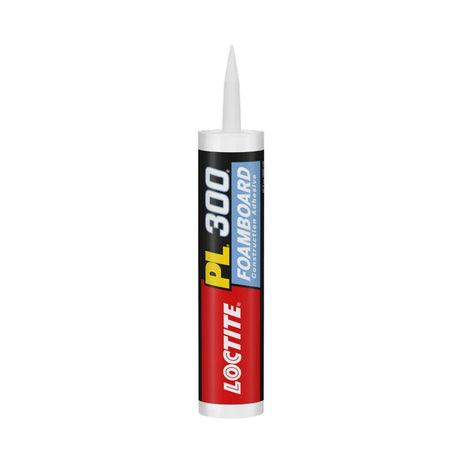
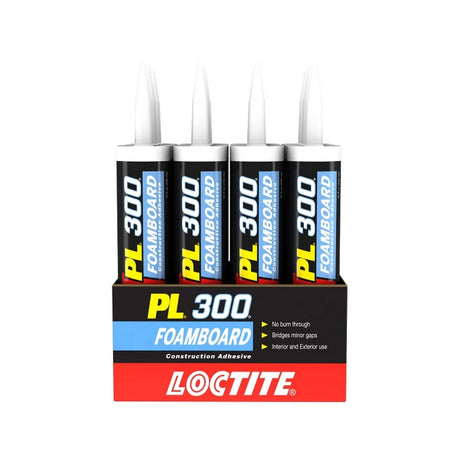
Loctite PL300 Foamboard Construction Adhesive
Regular priceFrom $11.65 USDUnit price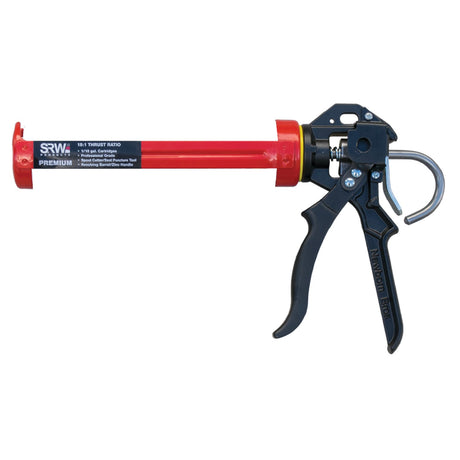
SRW 18:1 Thrust Ratio Premium Caulking Gun
Regular price $277.02 USDUnit price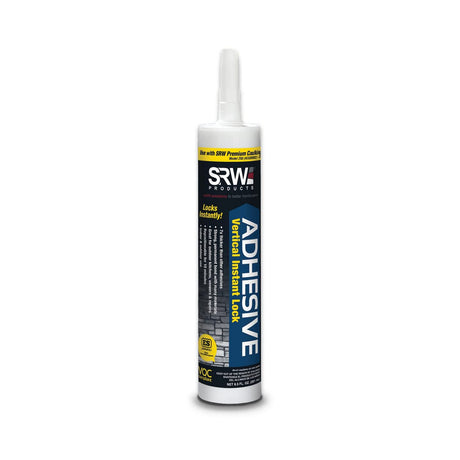
Shop Construction Adhesives for Hardscape, Foamboard and Channel Installs
Construction Adhesives for Vertical Surfaces and Foam Substrates
Construction adhesive does two separate jobs on a build: holding weight on a vertical face, and bonding materials that mechanical fasteners would damage. Instant-grab vertical formulas hold strong in under five seconds and carry up to 25 lbs on most materials, so stone, brick, and cap units stay put without mortar or bracing. Foamboard-safe latex formulas bond polystyrene to wood, concrete, drywall, brick, and metal studs without burning through the foam. Hardscape and veneer crews need the first type. Insulation, panel, and substrate work needs the second.
Instant-Grab Adhesive vs Construction Glue: Key Differences
The practical difference is grab time against cure time. An instant-lock formula holds within five seconds and stays stable up to 200°F, which matters when nothing can slip while you work and heat exposure is likely. A latex foamboard formula sets in roughly 20 minutes and reaches full cure over seven days, leaving panels adjustable during layout and running low VOC for interior spaces. Anyone stacking veneer or capping a wall vertically wants the instant hold. Anyone sheeting insulation or bonding wide flat substrates gets a cleaner result from the slower cure.
Shop similar collections: High Bond Double Sided Tape | LED Under Cabinet Lighting | 8mm LED Strip Lights | 10mm LED Strip Lights | 12mm LED Strip Lights
Our Construction Adhesives Come from a Signage Manufacturer, Not a Catalog
We build signage and LED fixtures in our micro-factory near Knoxville, Tennessee, which is why this range is short and specific instead of a wall of tubes that all claim the same thing. We stock the 18:1 thrust ratio caulking gun these high-viscosity cartridges need, since anything under a 14:1 gun will not dispense them properly. That saves the second order most buyers place a week after the first. Orders over $450 ship free, and our 30-day returns policy applies.
Frequently Asked Questions
What materials can construction adhesives bond?
Construction adhesives can bond to a variety of materials, including brick, block, pavers, metals, wood, glass, ceramic tiles, natural and manufactured stones, veneers, dry stack, masonry, and are suitable for both indoor and outdoor repairs, including outdoor kitchens.
How long do adhesives take to dry/cure?
Adhesives typically take around 5 seconds to hold, but full drying or curing time can vary depending on the type of adhesive used. Most adhesives will take anywhere from a few minutes to 24 hours to fully dry or cure.
What is the best adhesive for construction projects?
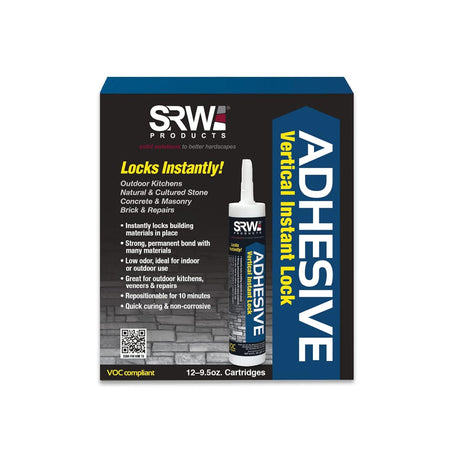
The best adhesive for construction projects is SRW Vertical Instant Lock Adhesive. It provides a super-strong, fast-setting bond that holds materials in place instantly, making it ideal for hardscape and construction jobs where precision and strength are crucial.
Can construction adhesives be used in extreme temperatures?
Yes, construction adhesives can be used in extreme temperatures, but it's important to choose the right type for the specific conditions. Some adhesives are designed to withstand both high and low temperatures, while others may lose their effectiveness. Always check the manufacturer's recommendations for temperature ranges to ensure optimal performance.>
Can construction adhesives be used on metal, wood, and concrete?
Yes, construction adhesives can be used on metal, wood, and concrete, provided the adhesive is labeled as suitable for those materials. Always check the manufacturer's specifications.>
How long does construction adhesive take to dry or cure?
Construction adhesive typically dries to the touch in 20–30 minutes and fully cures in 24–72 hours, depending on the brand, temperature, humidity, and materials used. Always check the specific product’s label for accurate drying and curing times.>
Are your construction adhesives waterproof and weather-resistant?
Yes, our construction adhesives are waterproof and weather-resistant.
What is the difference between construction adhesive and glue?
Construction adhesive is a heavy-duty bonding agent designed for building materials like wood, metal, concrete, and drywall, providing strong, durable, and often flexible bonds for structural use. Glue is a broader term for adhesives that can range from light craft or household use to stronger types, but generally, glue is less specialized and may not handle heavy loads or outdoor conditions as well as construction adhesive.
Can I paint over construction adhesive once it dries?
Yes, you can paint over construction adhesive once it dries, but it depends on the type of adhesive and paint. For best results, make sure the adhesive is fully cured, clean the surface, and use a primer suitable for non-porous surfaces before painting.
Do I need a caulking gun to apply construction adhesive?
Yes, you need a caulking gun to apply construction adhesive. You can use our SRW 18:1 Thrust Ratio Premium Caulking Gun for the best results.
How do I remove excess adhesive after application?
To remove excess adhesive after application, follow these steps:
- Act quickly: If the adhesive is still wet, use a clean cloth or paper towel to gently blot the area.
- Use rubbing alcohol or acetone: Dampen a cotton ball or cloth with rubbing alcohol or acetone (test on a small surface first to ensure it won't damage the material) and gently rub the excess adhesive.
- Apply a mild solvent: For tougher adhesives, use a commercial adhesive remover following the product's instructions.
- Clean the surface: Once the excess adhesive is removed, wipe the area with a damp cloth to remove any residue.